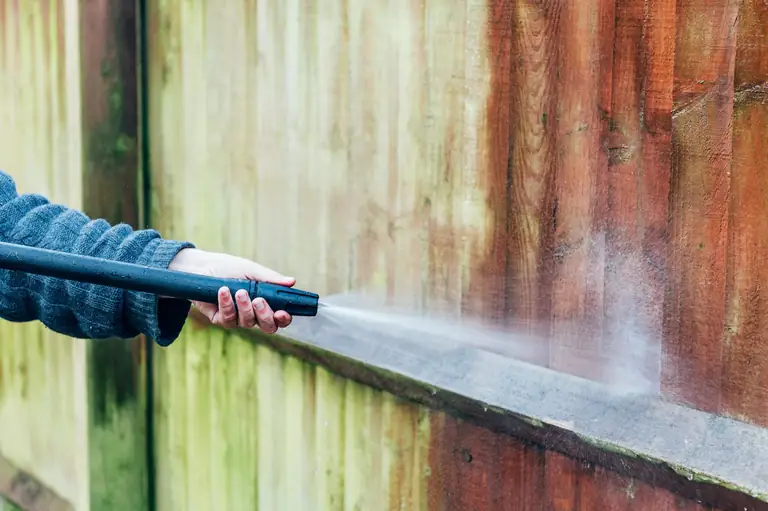
Pressure washing removes most of what builds up on a Georgetown driveway, including dirt, mud, mildew, algae, tire marks, runoff stains and sprinkler deposits. Very old or deep stains, such as an oil spot that has soaked in for years, may lighten a lot rather than disappear completely.
The mark on your concrete tells you which result to expect. Here is how to read it before you book anything.
What Are the Marks on Your Driveway?
Most driveway marks in Georgetown fall into one of these groups, and each one has a different cause.
| What you see | What it usually is | What to expect from a wash |
|---|---|---|
| Green or black film in shady spots | Algae or mildew | Comes off |
| Black streaks where you park | Tire marks | Comes off |
| Dark, general dinginess | Dirt and weather staining | Comes off |
| Tan or white arcs near the lawn | Calcium deposits from sprinklers | Comes off, and can return if the sprinklers keep hitting the slab |
| Orange or brown patches | Iron from sprinklers, or rust from metal | Comes off or lightens, depending on depth |
| Dark, shiny or soaked-in spots | Oil | Lightens, and old spots may not fully disappear |
| White, chalky patches near cracks or joints | Efflorescence from inside the concrete | Can return until the water source is stopped |
Why Do Sprinklers Stain Concrete in Georgetown?
Sprinklers stain Georgetown driveways because the water carries a heavy load of minerals. The City of Georgetown describes its water supply as ranging from hard to very hard, depending on the source serving your location.
City figures put water from the Lake Georgetown and Southlake plants at 176 to 178 mg/L as calcium carbonate, about 10 to 11 grains per gallon. Water from the Park Plant and Southside plants measures 309 to 320 mg/L, about 19 grains per gallon.
Stain Guys sees the result on the job: calcium and iron marks where sprinklers hit the concrete. Those marks wash off, but a sprinkler head that keeps spraying the slab will start laying them down again, so aiming the head back at the lawn is worth doing after a cleaning.
What Should You Do About an Oil Spot?
A fresh oil spot should be blotted right away, not wiped. The Portland Cement Association says petroleum oils readily penetrate concrete, that wiping spreads the stain and drives the oil deeper, and that oil removed promptly leaves little danger of staining.
The association’s concrete stain guide names cat litter, cornstarch and dry portland cement as absorbents for driveway oil, left overnight and then swept away. An old oil spot is a different job, because the oil is already inside the concrete. A pressure wash can lighten an old spot a lot, but it may not erase it.
How Can You Tell Rust From Other Orange Stains?
Rust stains are recognizable by their rust color and by how close they sit to steel or iron, according to the Portland Cement Association guide. Check for steel or iron sitting on or near the stain.
An orange stain with no metal nearby, in a pattern that follows the sprinkler spray, points to iron deposits from the water instead. Telling the crew which pattern you see helps set expectations before the work starts.
What Is the White Chalky Stuff on Concrete?
White, chalky patches near cracks and joints are usually efflorescence, a deposit that the Portland Cement Association says is often calcium carbonate carried to the surface by water moving through the concrete. The same guide says the first step in eliminating it is stopping the water from coming through.
Efflorescence is the one mark on this list where cleaning alone may not last. If white patches come back in the same place after a wash, look for the water source behind them.
Why Identify a Stain Before Treating It?
A stain should be identified before anyone tries to remove it, because the Portland Cement Association warns that the wrong product can spread a stain or leave one that is harder to remove. That warning is the reason to skip the hardware-store trial and error on an unknown mark.
The first step of a Stain Guys driveway pressure washing visit is a surface check, so the crew can look at the concrete and the stains and set the right pressure and flow. They will tell you what to expect before they start.
Why Clean the Whole Driveway Instead of One Stain?
Spot cleaning old concrete can leave a patch that stands out. The Portland Cement Association notes that removing a stain from old concrete can leave that area much lighter than the concrete around it, because the surface dirt came off with the stain.
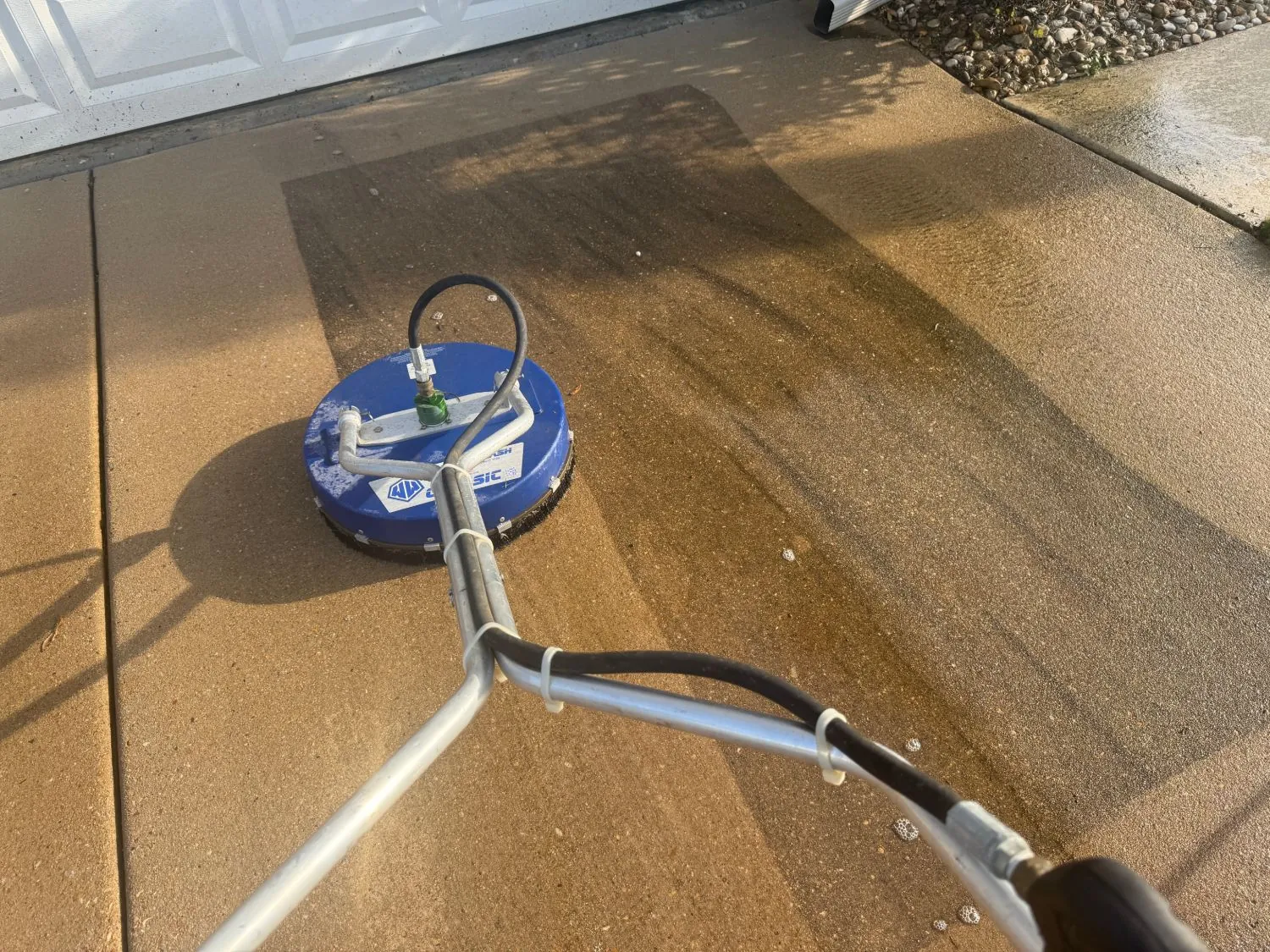
Stain Guys cleans the whole slab with a circular surface cleaner for a brighter, even look. The crew then rinses and details the edges, corners and expansion joints, and walks the work with you before leaving.
How Often Should a Georgetown Driveway Be Cleaned?
Every 1 to 2 years keeps most driveways looking clean. Most jobs take a few hours, and you can use your driveway again once it is dry. You do not need to be home as long as the crew has access to the area and a water spigot.
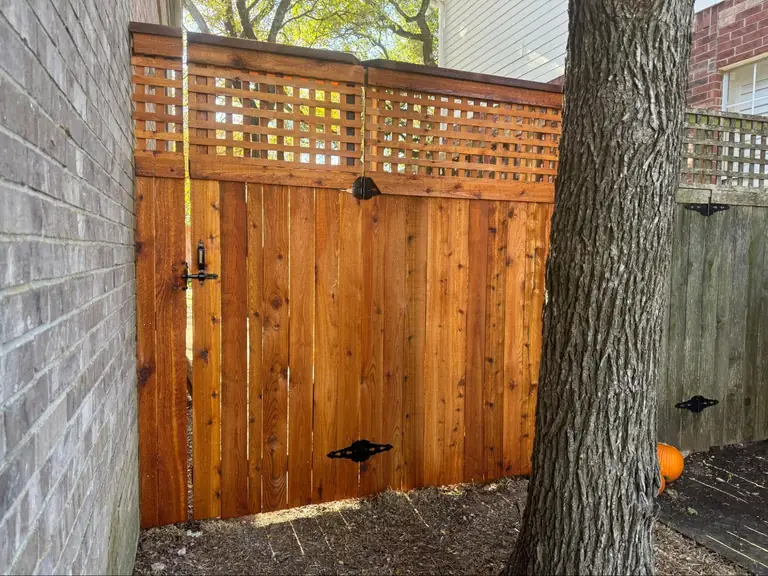
Many customers add a driveway wash to a fence staining visit so one trip covers both.
If your driveway or sidewalk in Georgetown, Sun City, Round Rock, Leander, Cedar Park or Liberty Hill has marks you would like gone, send the estimate request form with your address and what you need cleaned, and Stain Guys will get back to you with a clear price.